Flash Unit No. 1 - Pictures
During class we had someone to come in so we could take portrait pictures of that person. I took a few that seemed alright, however I'm a bit worried because my first contact sheet I made turned out pretty grey and now I'm worried that all my pictures will turn out a bit grey.
Unfortunately, the portrait picture is not developed yet and so I can not put it on my blog, yet.
Monday, March 9, 2009

Flash Unit No. 1 - Image Bank
Flash Unit No. 1 - Image Bank
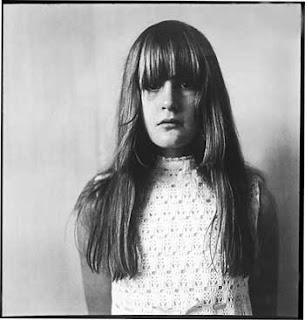 I think this portrait picture is very interesting. I really like how she is standing more to one side and I like the shadow in the background. I also really like the models expression of looking a bit sad or upset.
Diane Arbus
Born March of 1923 Diane Arbus grew up in Central Park West. When she turned 14, she met her future husband Allan Arbus and four years later they got married. They worked in the fashion industry as photographers and many of her great shots are from that time. Arbus' work in magazines were both very artistic and she got well paid. Arbus' photography career started in 1959 when she had been working with Lissette Model. In 1963 and 193 she received the Guggenheim fellowship for her style. John Szarkowski helped her with her first art exhibition in 1967 at the Museum of Modern Art. While Arbus was doing great and exploring the limits of photographic art her career unfortunately ended by her suicide on July 26, 1971.
 I think this portrait picture is very interesting. I really like how she is standing more to one side and I like the shadow in the background. I also really like the models expression of looking a bit sad or upset.
Flash Unit No. 1 - Theory Notes
Flash Unit No. 1 - Theory Notes
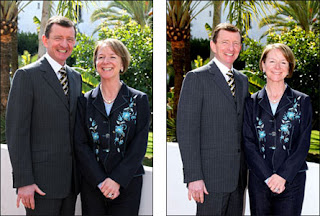 The photographer of these pictures used different settings with the flash. In the picture to the right there was no flash used and the sun gave the light. The picture to the right used a flash and it highlighted the details on the clothes and there is a clear different between the two pictures.
 Most digital cameras today have a built in flash.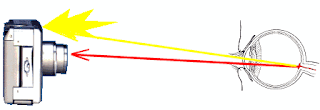
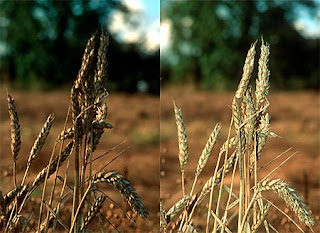 Even though a flash is not required, it is often used and can create another nice effect to the picture. In the picture to the right a flash is used and the wheat stands out.
Fill-in-Flash
A fill in flash can really help a picture get nicer. Without a fill in flash the subjects in the picture might get some very hard shadows or can be overly backlit so the faces are underexposed which ruins the picture. A fill in flash can also make a picture look much nicer by highlighting the eyes of the subject or adding another nice effect.
The photographer of these pictures used different settings with the flash. In the picture to the right there was no flash used and the sun gave the light. The picture to the right used a flash and it highlighted the details on the clothes and there is a clear different between the two pictures. A fill in flash can highlight the subjects and add effects to make the pictures much nicer. A fill in flash is meant to reduce the hard shadows and balance out the light on the subject.
Built-In-Flash
Most digital cameras today have a built in flash.Today, most digital cameras have a built in flash. The built in flash works for indoors and outdoors. Using it outside can help the picture by softening the eye shadow and the shadow under the chin. A common problem that is created by built in flashes are that often red eyes come when you have taken a photo. Red eyes appear if the flash is too close to the camera lens.
The red eye is caused from reflection from the color of the eye blood vessels in the retina.
Even though a flash is not required, it is often used and can create another nice effect to the picture. In the picture to the right a flash is used and the wheat stands out. Flash Guide Numbers
The guide number for an electronic flash helps quantifying its maximum output in terms that a photographer can relate to - aperture and distance. Putting the aperture and and distance (from flash to subject) will give the guide number and the combination will result in enough light for proper exposure.
The three most common ways to use the guide number are:
1)Find the correct aperture for a subject at a given distance when using manual flash
2) Find the maximum distance a flash will properly illuminate the subject at the given aperture
3) Comparing the relative power of the different flash units (higher guide number = more power)
Narrative Photography
Narrative Photography
For this narrative photography project we had to create four pictures that linked together and said a story. My story is about a girl whose dream is to be a dancer and a competition is coming up. She is working hard and practices everyday for this competition and through the pictures you can see the change in her confidence.
 The dancer in this story is not really using her whole body to dance with. She is a bit nervous and afraid to use her whole body. However, this competition is important to her and she is determined to do well.
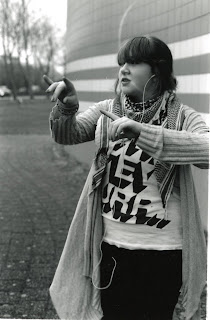 The more she dances, the more she relaxes and becomes comfortable. She is also thinking of new dance moves for her dance performance and thinking of some things she could do so that she could win. However, while the dancer is thinking, she cannot come up with anything and feels a bit down. She stops for a bit and starts thinking that she can't do this after all. The dancer decides to go home hat day after she has been dancing at her favorite spot, behind a building that no one goes to. She goes home and tells her mom that she does not want to do the competition anymore and then she storms up to her room. Her mom could tell she was deeply upset. but could not understand why she wanted to quit. She went to talk to her daughter and found out that her daughter was feeling down because she could not think of anything to do. She talked for her daughter and told her not to give up on something she loved so much and she encouraged her to keep going and practice hard and eventually she will come up with some great ideas. The dancer said she would think about what to do.
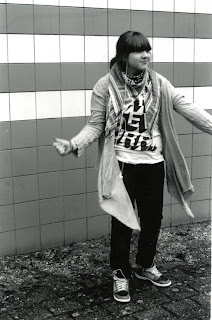 The next day the dancer decided she would try again. She went to the same spot where she always danced and decided to have fun dancing. She was listening to her ipod and while she was listening to her music she just started dancing. Without really thinking about it she came up with some great moves. She was really enjoying herself and having a great time. Her confidence boosted up and she had set her mind on doing this competition.
 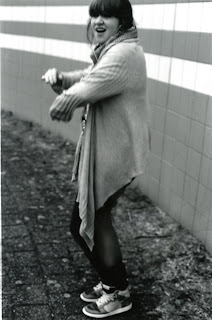 It was the day before the competition. She was extremely nervous for the competition, but since the first time she practiced, she had become a lot more confident and was not as worried. This time she was really relaxed and really enjoying herself. She went through the dance moves over and over again and she had a really good time. By the end of the day she was proud of her effort and improvement. Later she said to herself that it did not really matter if she won or not, as long as she was doing her best and having a good time.
It was the day of the competition and she was so nervous. She was just about to go and dance, and she felt like quitting the last minute, but reminded herself to dance like she has been practicing and just be free and have fun. She went on and did a great performance! The dancer had done great. When the results came she found out that she had come on third place and she was extremely proud. From that moment she decided to keep dancing forever and never quit like she was about to.
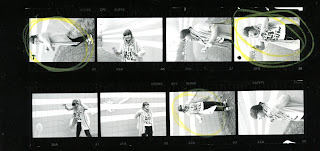 Here is the test-strip for this project. It went very quick to find the settings for the prints. I used all the same settings for all the prints so it went pretty quick to develop the prints. The settings for this test-strip are:
Aperture: 11
Time: 10
Filter: No Filter
The settings for all the prints are:
Aperture: 11
Time: 8
Filter: No Filter
Thursday, February 5, 2009
Narrative Photography - Artists
Narrative Photography - Artists

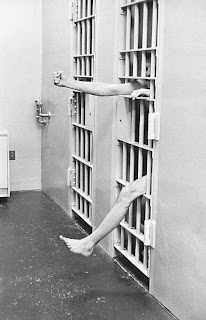
 (pictures from Lawrence Ripsher's narrative photography story called "The Cell")
Lawrence Ripsher

 (pictures from Lawrence Ripsher's narrative photography story called "The Cell")
 Lawrence Rispher is a British photographer who shoots a range of different pictures. He takes narrative pictures, sports pictures, photojournalism and portrait photography. His work is well known as it has been published and he has had some galleries. At the moment he is the Official Photographer for the Contender Asia and he's livng in Singapore.
Kristina Drobny
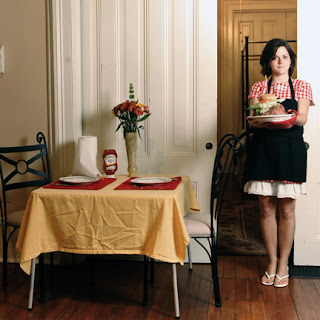
Kristina Drobny was born on January 30, 1980 and has always enjoyed drawing and writing stories. It was when she first picked up a camera in high school when she found her passion. She started talking pictures of people and likes to take pictures of meaningul topics. Droby graduated from Shepherd University in Shepherdstown with a BFA in photography and received the title of McMurran (highest achievemt to be attained at that school.) She also attended the Savannah College of Art and Design.
Henri Cartier-Bresson
Kristina Drobny

Kristina Drobny was born on January 30, 1980 and has always enjoyed drawing and writing stories. It was when she first picked up a camera in high school when she found her passion. She started talking pictures of people and likes to take pictures of meaningul topics. Droby graduated from Shepherd University in Shepherdstown with a BFA in photography and received the title of McMurran (highest achievemt to be attained at that school.) She also attended the Savannah College of Art and Design.
Henri Cartier-Bresson

Henri Cartier-Bresson (1908-2004)is a French photographer who loved photography ever since he picked up his first leica. In 1933 he had his first exhibition at the Julien Levy Gallery in New York and later he also made some films with other photographers like Jean Renoir.
Bresson was a prisoner of war in 1940 but managed to escape in 1943 and later he joined an underground organization to help prisoners and escapees. In 1945 he took pictures of the liberation of Paris along with other journalists. In 1947 he was one of the founders of the Magnum Photos along with Robert Capa, George Rodger, David 'Chim' Seymour and William Vandivert. In 1952 he published his first book called Images à la Sauvette. In 2003 he created the Foundation Henri Cartier-Bresson in Paris to take care of his work. Henri Cartier-Bresson has received several awards for his work and he has had many exhibitions and a lot of his work has been published.
Bresson was a prisoner of war in 1940 but managed to escape in 1943 and later he joined an underground organization to help prisoners and escapees. In 1945 he took pictures of the liberation of Paris along with other journalists. In 1947 he was one of the founders of the Magnum Photos along with Robert Capa, George Rodger, David 'Chim' Seymour and William Vandivert. In 1952 he published his first book called Images à la Sauvette. In 2003 he created the Foundation Henri Cartier-Bresson in Paris to take care of his work. Henri Cartier-Bresson has received several awards for his work and he has had many exhibitions and a lot of his work has been published.
Wednesday, February 4, 2009
Narrative Photography
Narrative Photography
Narrative photography is when a few pictures have been taken that link together and create a story. Photographers often decide to take a series of pictures linking together to tell a story or opinion. Lawrence Rispher is a British photographer who takes some narrative photos and he is work is known and it has been published. One of his stories is called "Fragments" and here are two pictures that are from the story and they link together 


Monday, December 15, 2008
Theory Notes and Annotations - Claustrophobia Project
Theory Notes and Annotations - Claustrophobia Project

This is my second contact sheet I developed with most of my pictures using a model who I have used before. I brought my friend outside and tried to find things and places to take pictures which were "claustrophobic". This contact sheet was very dark but it was able to use it to choose my big prints.
Aperture: 2.8
Time: 40
Filter: No Filter

This was my first contact sheet and the pictures turned out a bit light on this contact sheet, but it was able to see the pictures and decided what pictures to develop.
Aperture: 2.8
Time: 90
Filter: No Filter

This was the second print i developed and it didn't take too long to find the correct settings and to make a big print out of it. I just had to use a lot of time for this print. The settings are:
Aperture: 2.8
Time: 310
Filter:No Filter
Annotation
The girl is sitting in some bars tangled together and she is kind of stuck in between them. The girl looks a bit scared as she is stuck in between these bars thats makes her feel trapped.

This is my test-strip for the print below. This test-strip turned out pretty grey and light so for the big print I had to add lots of time and I took out the filter.
Settings for the test-strip:
Aperture: 2.8
Time: (from top to bottom) 55,5045,40
Filter: No Filter

From the test-strip above I decided to take out the filter and add more time. The settings are:
Aperture: 2.8
Time: 280
Filter: No Filter
Annotation
The girl in this picture is looking down at the ground and looks lonely and upset. She is making her body a bit smaller and her posture makes her seem small and upset. The dark area and closed off space she is walking in makes the subject seem more alone and upset. I consider this picture claustrophobic because the girl looks upset and she is walking in a dark, closed off space by herself.

It took a while to find the correct settings for this print. Because I took the picture up against the sky the top of the girl's head turned out very light. I kept adding more and more time but eventually I stopped adding time because the bottom part of the print was becoming very dark. Settings:
Aperture: 2.8
Time: 310
Filter: No Filter
Annotation
The model is standing up on something and heights can make some people feel uneasy and claustrophobic. Standing up and looking down makes me worried and big heights is not something I'm a big fan of. The face expression looks a bit scared and as if she kind of wants to go down from there.

This test-strip turned out very, very dark. Settings:
Aperture: 2.8
Time:310
Filter: No Filter

The first time I made a big print for this picture it turned out too dark so for this print I used less time but same aperture. Settings:
Aperture: 2.8
Time: 240
Filter: No Filter
Annotation
You can clearly see on the expression of this girl that she looks worried and uneasy standing between those bars. The bars around her are making the space smaller and you can see that the small space is making the subject feel a bit "claustrophobic".
Subscribe to:
Posts (Atom)